

The manor park
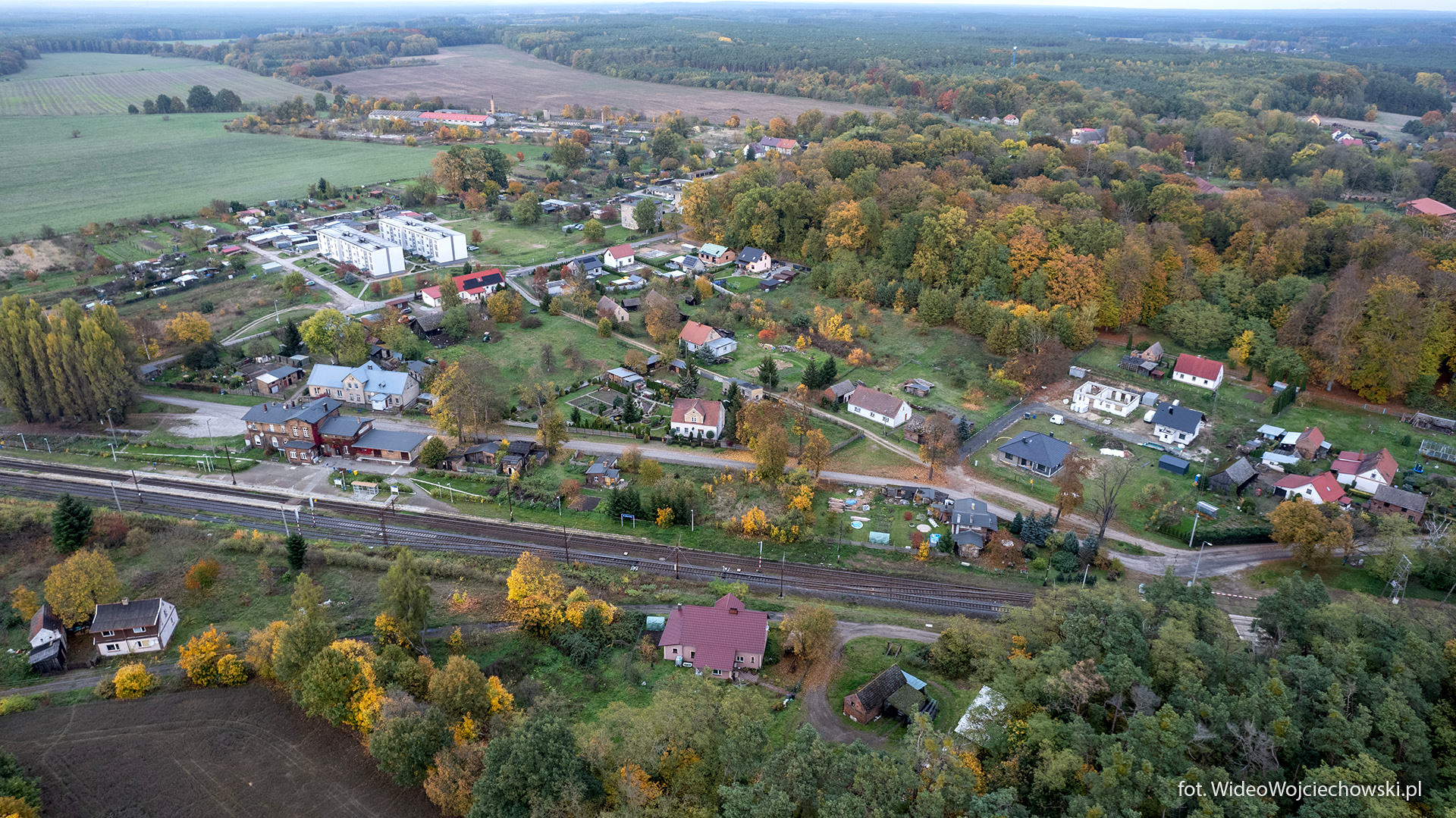
In the north-western part of Budachów, in the Lubusz Voivodeship, lies a historic manor park covering about 8.5 hectares. It is one of the village’s most valuable historical and natural sites. Probably laid out at the end of the 18th century, the park has kept parts of its original landscape design: ancient trees, historic avenues, remnants of orchards and gardens, and two ponds.
Today the park is a remarkable record of the relationship between people and nature. Here, the garden art of the past meets natural ecological processes, and old trees and faded paths recall the history of a residence that no longer exists.
History of the manor park
The park probably dates back to the late 18th century, when an extensive landscape garden was created next to the local estate.
Unlike formal baroque gardens, based on geometric avenues, symmetry and clipped hedges, the landscape park imitated natural scenery. It made use of existing trees, the lie of the land, clearings and freely winding walking paths.
The Budachów park combined designed planting with patches of natural forest, especially in its northern and western parts.
Next to the park stood a manor house from the mid-19th century, probably built on the site of an earlier residence. It stood at the edge of the farmyard.
Towards the end of the Second World War the manor house burned almost completely. It was rebuilt in the 1950s, but after it was abandoned in the 1980s it gradually fell into ruin.
Unlike the house, the park has partly survived, although its original design has been largely obscured by self-seeded trees and shrubs.
Landscape and historic layout
The park occupies an irregularly shaped area with varied terrain. Its landscape is made up of old avenues, wooded areas, clearings, remnants of gardens and gently rising and falling ground.
In the northern part, traces of an old hornbeam avenue running parallel to the park boundary have survived. The estate’s vegetable garden was also located nearby.
In the centre of the park there are two clearings, once connected by an avenue that has since become almost completely overgrown. A walnut tree and old apple varieties grow there, recalling the area’s former use as a garden.
The western part is woodland in character, dominated by beeches together with oaks, limes and black locusts.
The southern part of the park, on ground sloping towards the south, is particularly interesting. Remnants of an old orchard, terraces and walking paths have survived there. Despite becoming overgrown, the area still offers fine views.
Old trees – the most precious witnesses of history
One of the greatest treasures of the Budachów manor park is its old trees.
According to heritage documentation, the oldest trees were about 200 years old. They are mainly pedunculate oaks, common beeches and European white elms.
The park also has hornbeams, small-leaved limes and black locusts.
Particularly noteworthy are the surviving ornamental trees, which show that the former garden was deliberately designed. They include:
- copper beech (Fagus sylvatica ‘Atropunicea’);
- variegated box elder (Acer negundo ‘Variegatum’);
- walnut (Juglans regia);
- old apple varieties (Malus).
Ancient trees are not only witnesses to the past. They are also vital habitats for fungi, insects, birds and other animals.
Hollows, dead branches, cracked bark and decaying wood form microhabitats on which many species associated with old trees depend.
Shrubs and park vegetation
The park’s biodiversity is enriched by many species of shrubs, both native and those introduced long ago as ornamentals.
Heritage documentation lists, among others, golden currant, Japanese spiraea, common snowberry, coralberry, warty spindle, sweet mock-orange and Oregon grape.
Common ivy also grows in the undergrowth and beneath the tree canopy, forming a characteristic green ground cover and climbing some of the trees.
This varied vegetation gives the park both historical and natural value, although some of the original planting has been overtaken by spontaneous growth.
Ponds and water management
There are two ponds in the park, close to the village road.
In the past, a network of drainage ditches was also an important part of the estate. Especially in the northern part of the park, they regulated the water on naturally wet ground.
Over the years some of the ditches have silted up and become overgrown.
The ponds and wetlands increase the variety of habitats in the park. Such places can provide homes and breeding sites for amphibians, aquatic insects and other water-dependent organisms.
The former vegetable garden and orchard
One of the most interesting features of the historic estate is the combination of an ornamental park with productive gardens.
North of the former manor house there was a vegetable garden, and in the southern part of the park an orchard.
The surviving old apple trees and walnut are traces of these former crops.
They remind us that historic estates were not only places where their owners lived and relaxed, but also complex farms growing vegetables, fruit and ornamental plants.
The history of these gardens can inspire today’s educational activities on traditional gardening, old fruit varieties and protecting biodiversity.
Heritage protection and the need for restoration
The manor park in Budachów is protected as a listed historic monument.
A study published in 2013 by the Lubusz Provincial Heritage Conservator noted that no comprehensive conservation or maintenance work had been carried out in the park since the end of the Second World War.
As a result of decades of neglect, some of the historic trees have been lost, the old avenues have become overgrown and the layout has become harder to read.
The documentation stresses the need to restore the whole site.
Well-planned restoration should both make the historic design legible again and preserve valuable habitats, the old trees and natural ecological processes.
The manor park – a heritage for future generations
The manor park in Budachów is more than a remnant of an old estate.
It is a living archive of nature and history, where ancient trees, old avenues, forgotten orchards and ponds tell of changes in the landscape and in the way the land was farmed over the centuries.
Its exceptional value lies in the combination of cultural heritage and natural richness.
Protecting the park, documenting its history, identifying tree species and surviving plant varieties, and making the old designs visible again could become an important undertaking for the local community.
The manor park in Budachów is a place where history is not written only in documents. It lives on in the trees, the landscape and nature.
Sources and notes
Lubusz Provincial Heritage Conservator – Manor park in Budachów (in Polish): https://lwkz.pl/monument/budachow-park-dworski/
National Institute of Cultural Heritage – monument record (in Polish): https://zabytek.pl/pl/obiekty/g-233282
Zamki Lubuskie – Budachów (Baudach) (in Polish): https://zamkilubuskie.pl/budachowbaudach/
Information on the park’s condition is based on documentation from 2013 and does not replace a current site inspection. The descriptions of ecological functions are supplementary background, not the result of a current survey.
